
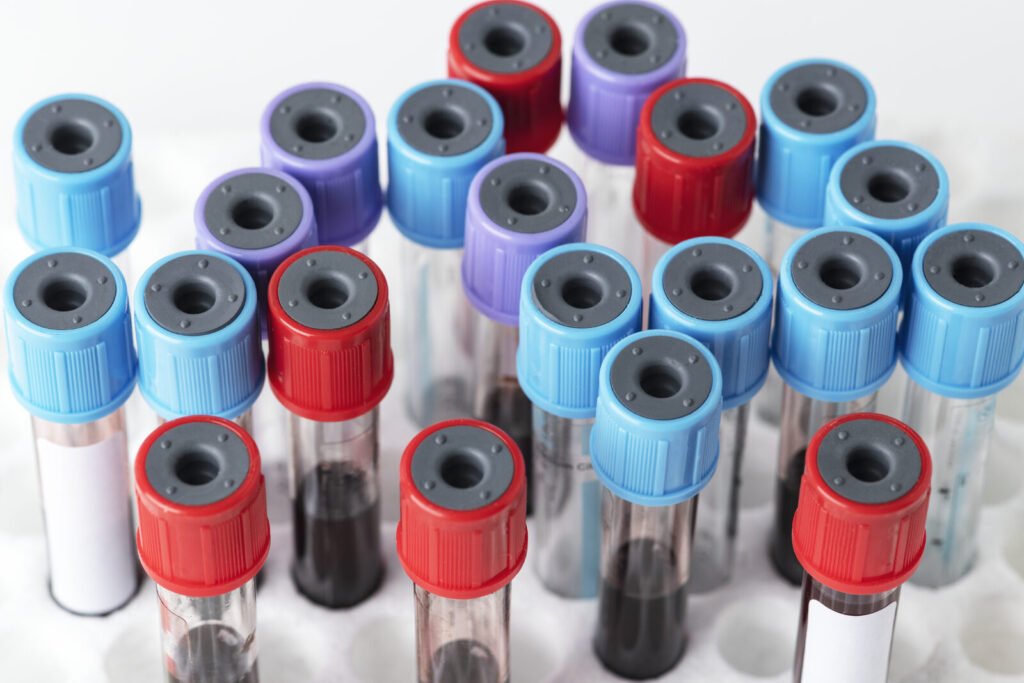
3-part vs 5-part hematology analyzer
Both give a complete blood count. The difference is how far they break down the white cells, and that decides how many samples your team still has to check under the microscope.
- PatientsScreening or hospital cases
- Report3 or 5 white cell groups
- WorkloadSamples per day
- ReviewSlides your team can read
- BudgetPrice and cost per test
What is the difference between 3-part and 5-part?
A 3-part hematology analyzer sorts white blood cells into three groups: lymphocytes, mid-sized cells and granulocytes. A 5-part analyzer reports the five types separately: neutrophils, lymphocytes, monocytes, eosinophils and basophils. A 3-part system suits routine screening in clinics and small laboratories; a 5-part system suits hospitals and laboratories that see fever, infection, allergy and blood disorders every day.
Why the differential matters
The complete blood count is the workhorse test in India. NFHS-5 found anaemia in 57.0% of women aged 15 to 49 and 67.1% of children aged 6 to 59 months, and in dengue season serial platelet and haematocrit counts guide care day by day.
Every analyzer flags some samples for a slide review. An international consensus group tested 41 review rules on 13,298 samples, and a College of American Pathologists survey put the usual slide review rate at 26.7%. A 5-part differential with good flagging keeps that review to the samples that need it.

3-part and 5-part compared
| 3-part | 5-part | |
|---|---|---|
| White cell groups | Lymphocytes, mid cells, granulocytes | Neutrophils, lymphocytes, monocytes, eosinophils, basophils |
| Eosinophil count | Not reported separately | Reported |
| Price and cost per test | Lower | Higher |
| Best place | Clinics, small laboratories, health camps | Hospitals, reference and specialty laboratories |
| Example | Avantor BeneSphera H33 | Sysmex XN-330, XN-350, XN-550 (5-part plus immature granulocytes) |
See 3-part analyzers, 5-part analyzers and the Sysmex XN-550.
When a 5-part analyzer is worth it
Hospital patients
Inpatients, ICU and emergency samples with abnormal counts.
Fever seasons
Dengue and other infections where the differential and platelets are followed daily.
Allergy and parasites
When clinicians ask for eosinophil counts.
Oncology and haematology
Patients on treatment that affects the marrow.
High workload
When manual differentials are taking too much technician time.
Accreditation plans
When you want documented review rules.
How Milap helps
Site check and demo
We look at your workload and location, and show the system working before you decide.
Installation by our own engineers
Commissioning, checks and handover are done by Milap engineers.
Training for every shift
Application training for the nurses, technicians and doctors who will run samples.
Service after the sale
AMC and CMC contracts, with breakdown calls answered during evenings and weekends too.
Sources
NFHS-5, Press Information Bureau.
Slide review rules and rates, review article on PubMed Central; Barnes PW et al., Lab Hematol 2005.
Sysmex, XN-L series brochure.
Frequently asked questions
Often yes, if most samples are routine screening and abnormal ones are referred or reviewed on a slide.
No. It reduces manual differentials, but flagged samples still need a slide review.
It reports platelets and haematocrit, which are what is followed. Low platelet counts should be confirmed according to your laboratory policy.
A 5-part analyzer uses more reagents, so cost per test is higher. Ask for cost per reported result at your workload.
Sysmex XN-series analyzers, which report a 5-part differential plus immature granulocytes, and the Avantor BeneSphera H33 3-part analyzer, with installation, training and service.
Deciding between 3-part and 5-part?
Tell us your daily samples and patient mix and we will recommend a model and arrange a demo.