
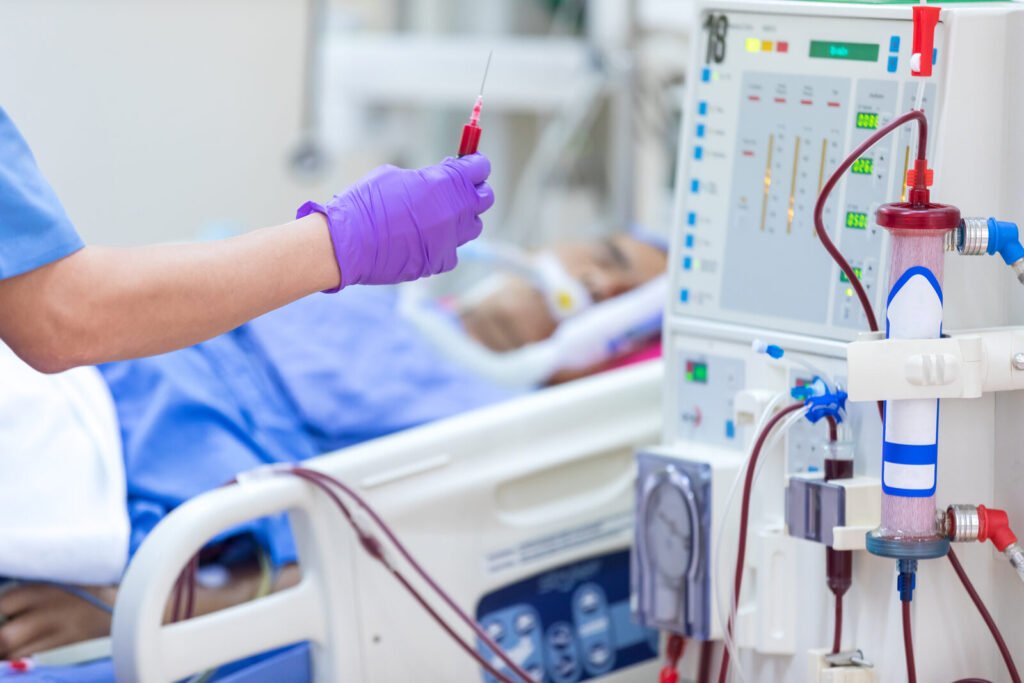
Starting CRRT in the ICU
Some patients with kidney failure are too unstable for a standard dialysis session. Continuous renal replacement therapy (CRRT) treats them slowly, around the clock, at the bedside.
- PatientsUnstable with kidney injury
- MachineModes and anticoagulation
- ProtocolDose, fluids, monitoring
- PeopleTrained ICU nurses
- SupportConsumables and service
What does an ICU need to start CRRT?
An ICU needs a CRRT machine that offers the therapy modes and anticoagulation its doctors will use, a written protocol for dose, fluids and monitoring, a core group of nurses trained to run it day and night, a reliable supply of filters, lines and fluids, and a service partner for the machine. The nephrologist and intensivist should agree the protocol before the first patient.
Why ICUs add continuous therapy
Acute kidney injury is common in intensive care: in the AKI-EPI study of 1,802 patients in 97 ICUs, 57.3% developed it. KDIGO guidance suggests continuous therapy in place of intermittent dialysis for patients who are haemodynamically unstable.
The same guideline recommends delivering an effluent volume of 20 to 25 mL/kg per hour, and suggests regional citrate anticoagulation in place of heparin for patients with no contraindication to citrate. Both points shape which machine and fluids you choose.
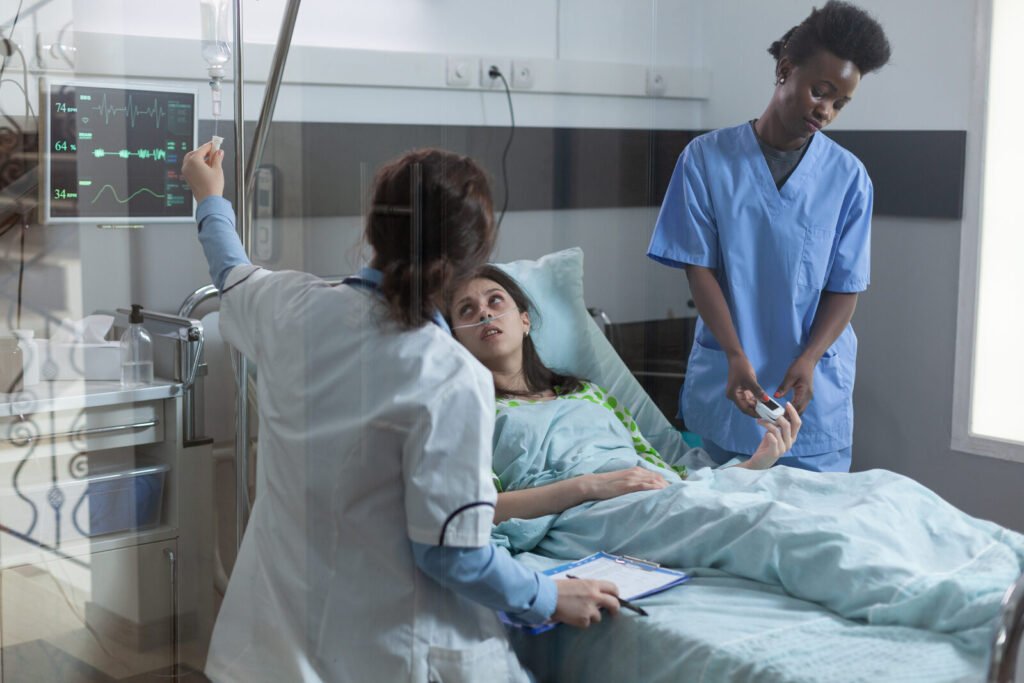
CRRT modes in plain words
| Mode | How it clears the blood |
|---|---|
| CVVH | Convection: fluid is filtered out and replaced |
| CVVHD | Diffusion: dialysis fluid runs past the filter |
| CVVHDF | Both together |
The Fresenius multiFiltratePRO offers CVVH, CVVHD and CVVHDF with built-in Ci-Ca regional citrate anticoagulation. For chronic dialysis, see our guide on setting up a dialysis unit.
Planning checklist
Patient numbers
How many ICU patients a month are likely to need it.
Anticoagulation
Citrate, heparin or both, and the monitoring each needs.
Fluids and filters
Stock levels and a supplier who can deliver at short notice.
Nurse training
A core group for every shift, with refresher sessions. One hospital that expanded its trained group saw filter life rise from 26 to 31 hours.
Protocols
Dose, fluid balance, electrolyte checks and alarm handling.
Laboratory support
Quick electrolyte and blood gas results, ideally at the bedside.
How Milap helps
Demonstration
We show the system to your ICU and nephrology team before you decide.
Installation by our own engineers
Set-up and checks at your ICU.
Training
For the nurses and doctors who will run the therapy.
Service
AMC and CMC contracts, with breakdown calls answered during evenings and weekends too.
Sources
Hoste EAJ et al., AKI-EPI study, Intensive Care Med 2015.
KDIGO clinical practice guideline for acute kidney injury, 2012.
CRRT quality programme, Scientific Reports 2020.
Fresenius Medical Care, multiFiltratePRO brochure.
Frequently asked questions
CRRT runs continuously at a slow rate, which unstable patients tolerate better. Haemodialysis is given in sessions of a few hours.
No. CRRT uses sterile fluids supplied in bags.
Hospitals differ. Whoever runs it needs training and cover on every shift.
It prevents clotting in the circuit without thinning the patient’s blood. KDIGO suggests it where there is no contraindication.
Yes. Milap engineers install and service the Fresenius systems we supply.
Planning to start CRRT in your ICU?
Tell us your ICU size and patient numbers and we will arrange a demonstration.