
How to choose a urine analyzer
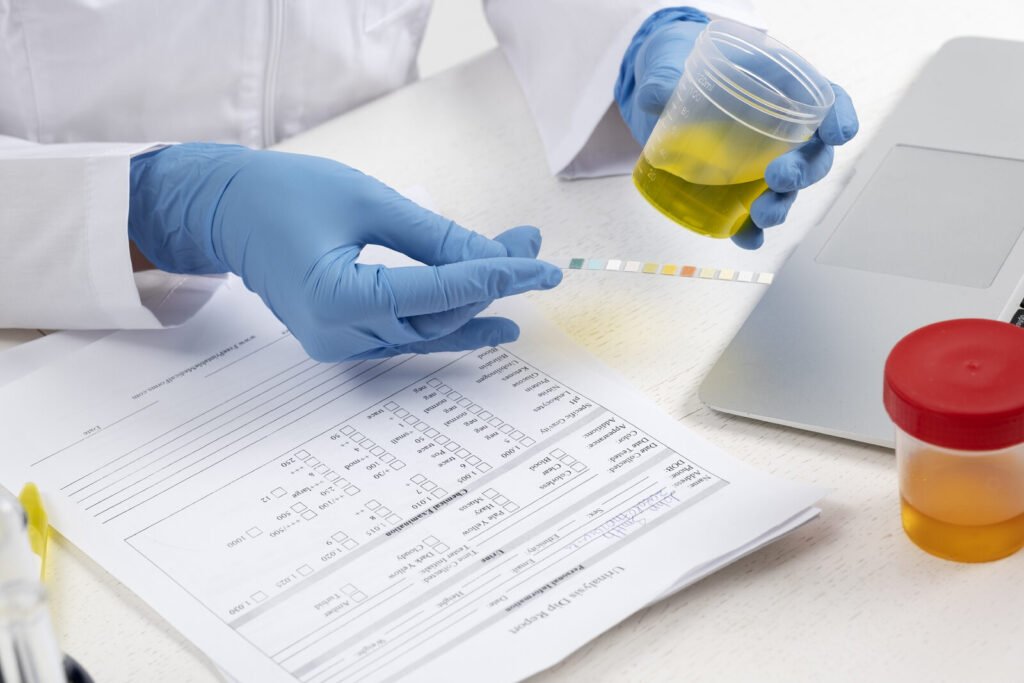
Urinalysis is one of the most requested tests in any clinic or laboratory, and it is often still read by eye. This guide helps you match the analyzer to your workload.
- WorkloadSamples per day
- TestsStrip chemistry, ACR, sediment
- WhereClinic, ward or laboratory
- RecordsPrintout or LIS
- SupportStrips, training and service
Which urine analyzer does your facility need?
Choose by samples per day and by where the test is done. A clinic, ward or small laboratory is usually served by a strip reader that reads one strip at a time. A busy laboratory needs a semi-automated or fully automated analyzer that keeps pace with the queue. If you screen for kidney disease, make sure the system reports the albumin-to-creatinine ratio.
Why urine testing deserves a proper system
Urinalysis is the third major screening test in the clinical laboratory, after serum chemistry and the complete blood count. Samples do not keep: guidance is to examine urine within about two hours of collection, so a queue of samples waiting to be read is a quality problem as well as a delay.
Kidney disease is common. The SEEK study found chronic kidney disease in 17.2% of the Indian adults it screened, and urine albumin is how it is caught early. KDIGO grades albuminuria by the albumin-to-creatinine ratio: below 30 mg/g is normal to mildly increased, 30 to 300 mg/g is moderately increased, and above 300 mg/g is severely increased.
Three types of urine analyzer
| Strip reader | Semi-automated | Fully automated | |
|---|---|---|---|
| Example | Siemens CLINITEK Status+ | Siemens CLINITEK Advantus | AVE-772 |
| Best place | Clinic, ward, small laboratory | Mid-volume laboratory | High-volume laboratory |
| How it works | One strip at a time, read by the instrument | Operator dips and places strips; the analyzer times and reads them | Tubes are loaded; the analyzer handles the sample |
| Staff time per sample | Highest | Medium | Lowest |
| Suits | Low daily numbers | Steady batches | Large daily workload |
See the CLINITEK Status+, CLINITEK Status Connect, CLINITEK Advantus and AVE-772, or all urine analyzers.
What to check before you buy
Daily samples
Count a normal day and a peak day, not the average.
Test menu
Routine strip chemistry, albumin-to-creatinine ratio, and whether you need sediment analysis.
Timing
An instrument times each strip, which removes one source of variation between staff.
Records
Printed or electronic results in place of handwritten registers.
Connectivity
Transfer to the LIS or HIS if you have one, or plan to.
Strip supply
A reliable local source for strips and controls.
How Milap helps
Site check and demo
We look at your workload and location, and show the system working before you decide.
Installation by our own engineers
Commissioning, checks and handover are done by Milap engineers.
Training for every shift
Application training for the nurses, technicians and doctors who will run samples.
Service after the sale
AMC and CMC contracts, with breakdown calls answered during evenings and weekends too.
Sources
Delanghe and Speeckaert, Biochemia Medica 2014.
Singh AK et al., SEEK study, BMC Nephrology 2013.
KDIGO 2024 chronic kidney disease guideline, albuminuria categories.
Siemens Healthineers, CLINITEK Microalbumin 2 reagent strips.
Frequently asked questions
Trained staff reading by eye can agree closely with an instrument. The gain from an analyzer is consistent timing, a recorded result and less dependence on who is on duty.
There is no single cut-off. If strips are queueing or one technician spends much of the shift on urine, it is time to look at automation.
Yes. With CLINITEK Microalbumin 2 strips, the CLINITEK Status family gives a semi-quantitative albumin-to-creatinine ratio.
Yes. Connected models send results to the LIS or HIS so they are not copied by hand.
Milap supplies strips, controls and spares for the systems it installs.
Not sure which urine analyzer fits?
Tell us your daily samples and where testing is done, and we will suggest a system.