
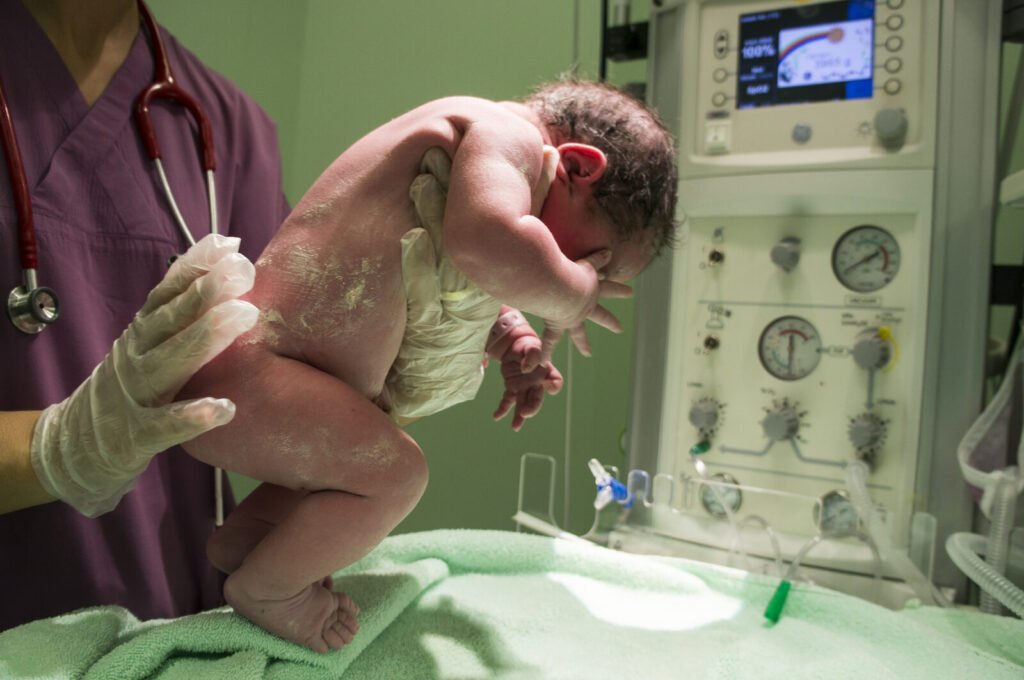
Bedside blood gas testing for NICU and emergency care
Some patients cannot wait for a sample to travel to the laboratory, and some cannot spare the blood. This guide explains when bedside blood gas testing is the better choice.
- WhoPatients who cannot wait
- SampleSmall volumes for neonates
- SpeedResults in minutes
- QualityLaboratory oversight
- RecordResults sent to LIS or HIS
When should blood gas testing move to the bedside?
Move blood gas testing to the bedside when the result changes treatment within minutes, when the patient has very little blood to give, or when the laboratory is far from the unit. That usually means the NICU, emergency department, ICU, operating theatre and patient transport. The laboratory should still oversee training and quality control.
Small patients, small samples
Blood loss from testing is a real burden for the smallest babies. In one study of extremely low birth weight infants, the median blood taken for tests up to 40 weeks was 28.1 mL, and 86.2% of the infants needed a transfusion.
A system that works from a small sample reduces that loss. The Siemens epoc system needs at least 92 µL of blood and reports in under one minute after the sample is added.
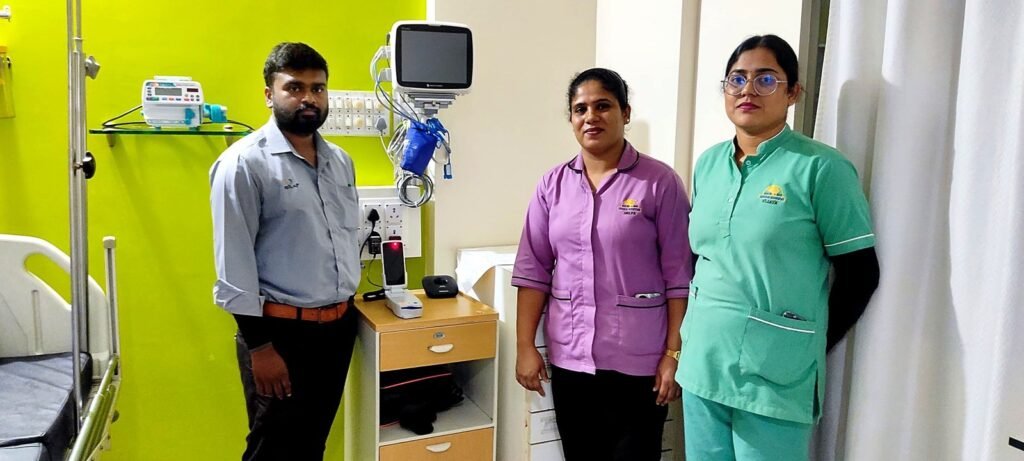
Where bedside testing helps most
NICU
Small samples and results beside the incubator.
Emergency department
Faster decisions on admission, ventilation and fluids.
ICU
Frequent checks on ventilated patients without a porter.
Operating theatre
Results during surgery, not after it.
Transport and small units
A handheld system goes where the patient goes.
Dialysis units
Quick electrolyte checks when needed.
Bedside testing and laboratory testing compared
| Bedside | Central laboratory | |
|---|---|---|
| Time from sample to result | Minutes; a Danish study measured 24 minutes | Longer; the same study measured 70 minutes |
| Sample handling | No transport | Transport and queueing |
| Who runs it | Trained nurses and doctors | Laboratory technicians |
| Cost per test | Usually higher | Usually lower |
| Quality control | Built into the system, supervised by the laboratory | Run by the laboratory |
The Siemens epoc blood analysis system is a handheld analyzer that uses single-use test cards stored at room temperature, between 15 and 30 °C, so there is no refrigerator to manage on the ward. For a steady workload at one location, the benchtop RAPIDPoint 500e may cost less per test; our guide on how to choose a blood gas analyzer compares the two.
How Milap helps
Site check and demo
We look at your workload and location, and show the system working before you decide.
Installation by our own engineers
Commissioning, checks and handover are done by Milap engineers.
Training for every shift
Application training for the nurses, technicians and doctors who will run samples.
Service after the sale
AMC and CMC contracts, with breakdown calls answered during evenings and weekends too.
Sources
Frontiers in Pediatrics 2023, phlebotomy loss in extremely low birth weight infants.
Nørgaard and Mogensen 2012, Scand J Trauma Resusc Emerg Med.
Siemens Healthineers, epoc blood analysis system.
Frequently asked questions
Modern point-of-care systems are validated against laboratory methods. Accuracy in practice depends on trained users and quality control.
It depends on the system. The epoc system needs at least 92 µL and the RAPIDPoint 500e uses 100 µL.
epoc test cards are stored at room temperature, 15 to 30 °C.
Yes. Results can be sent to the LIS or HIS so they are not copied by hand.
The laboratory should oversee it, as ISO 15189:2022 expects for point-of-care testing, with ward staff running the checks the system asks for.
Thinking about bedside testing for your unit?
Tell us the unit, bed numbers and daily samples and we will arrange a demo.