
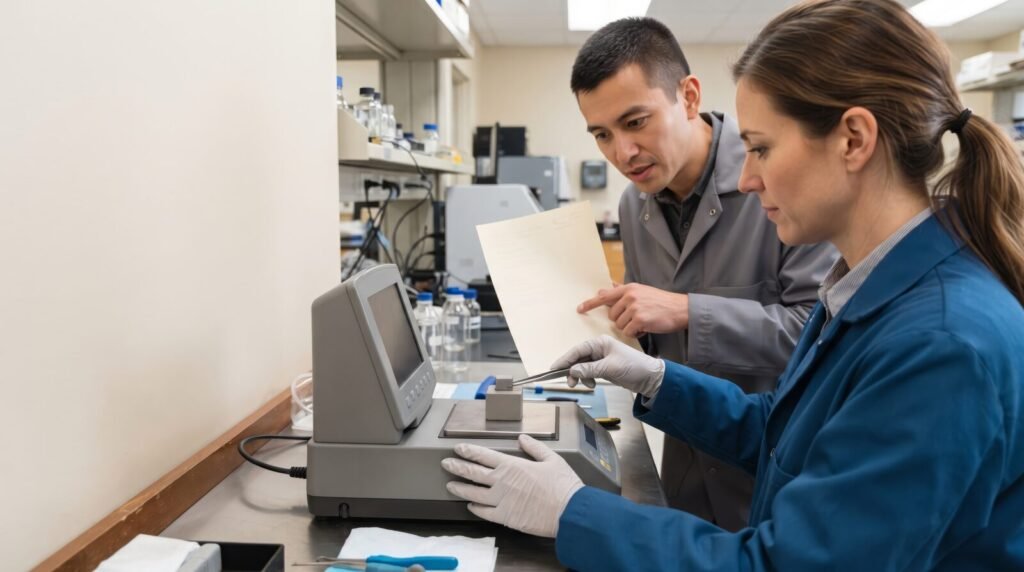
Preparing your site for a new analyzer
Most installation delays have nothing to do with the analyzer. They come from a missing earth point, a weak bench or a water supply nobody checked. This checklist helps you get the room ready first.
- SpaceBench load and clearance
- PowerEarthing and UPS
- WaterGrade and supply
- RoomTemperature and humidity
- NetworkLIS point and barcodes
What does a site need before an analyzer arrives?
Before delivery, confirm six things: a bench or floor area that takes the weight with clearance around it, a stable earthed power supply with a UPS, the grade of water the analyzer needs, a room held within its temperature and humidity range, drainage if required, and a network point if results will go to your LIS or HIS. The exact figures differ by model, so ask for the manufacturer site requirements for the system you are buying.
Why installations get delayed
An analyzer cannot be commissioned until the room meets its stated conditions. NABL 112A asks laboratories for an uninterrupted power supply, electrical safety checks of all points every six months, and documented installation, operational and performance qualification, with performance verified before patient samples are run.
If the site is ready, commissioning is quick. If it is not, the analyzer waits in its crate while an electrician or plumber is found.
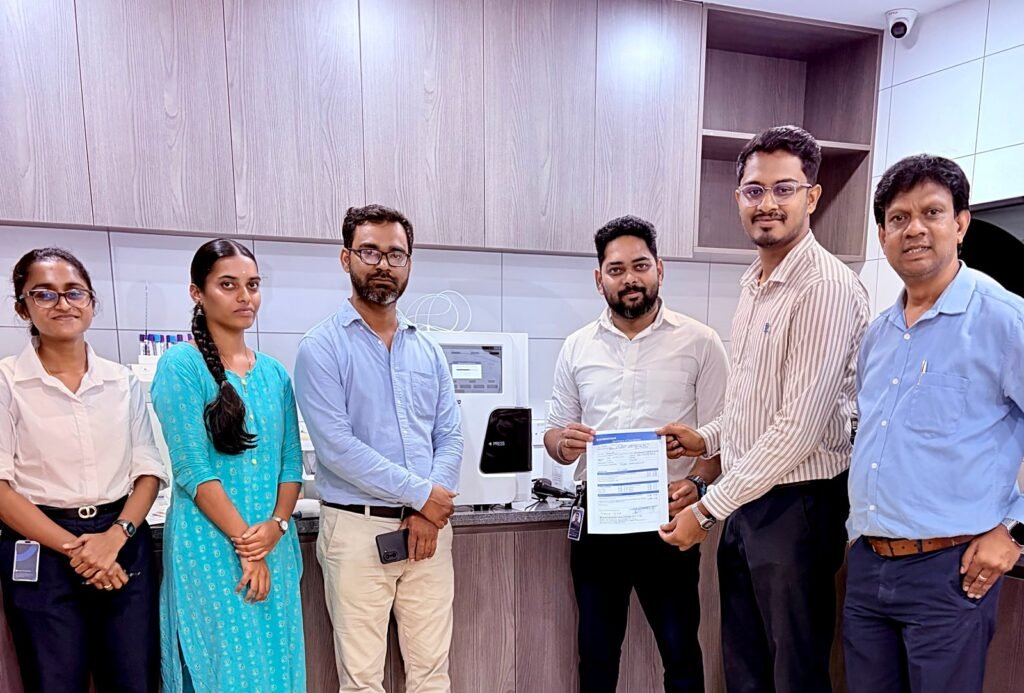
Requirements differ by model
| Siemens RAPIDPoint 500e | Mindray BS-240 | Sysmex XN-550 | |
|---|---|---|---|
| Type | Blood gas analyzer | Biochemistry analyzer | Hematology analyzer |
| Weight | 16.55 kg | 79 kg | About 53 kg |
| Power | 100 to 240 V, 150 VA | 200 to 240 V, up to 1000 VA | See manufacturer sheet |
| Room conditions | 15 to 30 °C, 5 to 85% humidity | See manufacturer sheet | See manufacturer sheet |
| Water | None | Up to 4 litres an hour | None from a tap; uses packaged reagents |
These figures come from published manufacturer data sheets and are examples only. We confirm the current requirements for your model at the site check.
Site readiness checklist
Bench and floor
A level surface that takes the weight, with space behind and beside for air flow and service access.
Power and earthing
A dedicated earthed socket, a UPS sized for the load, and voltage within the stated range.
Water
The grade the analyzer specifies. NABL 112A asks for Grade II water for reconstituting reagents.
Room conditions
Air conditioning that holds the stated temperature and humidity through the day and night.
Drainage and waste
A drain or waste container, and a plan for biomedical waste.
Network
A LAN point near the analyzer and barcode labels if results go to the LIS.
How Milap helps
Site check before delivery
We confirm space, power, earthing, water, drainage, temperature and network points.
Installation by our own engineers
Unpacking, set-up, calibration and control runs.
LIS or HIS connection
Interfacing so results reach your system on their own.
Training at handover
Application training for the staff who will run the system.
Sources
NABL 112A, Specific criteria for accreditation of medical laboratories.
Siemens Healthineers, RAPIDPoint 500e specification sheet.
Mindray, BS-240 data sheet.
Sysmex, XN-550 specification sheet.
Frequently asked questions
As soon as the order is placed. Electrical and water work often takes longer than delivery.
We recommend one for every analyzer. A power cut during a run can lose samples and reagents.
No. Many hematology and blood gas systems use packaged reagents. Wet biochemistry analyzers usually need purified water.
Milap engineers check the site before delivery for the systems we supply.
Blood gas analyzers are typically running within 24 to 48 hours of delivery. Larger systems depend on site readiness.
Need a site check before your analyzer arrives?
Tell us the model and the room you plan to use and we will tell you what to prepare.