
How to choose a CLIA immunoassay analyzer
Thyroid, vitamin D, fertility and cardiac tests are among the fastest-growing requests in Indian laboratories, and many are still sent out. This guide helps you decide when and how to bring them in house.
- MenuThyroid, fertility, cardiac, vitamin D
- WorkloadTests per hour
- SpeedTime to first result
- ReagentsPositions and stability
- SupportLocal service and supply
What should a laboratory look for in a CLIA analyzer?
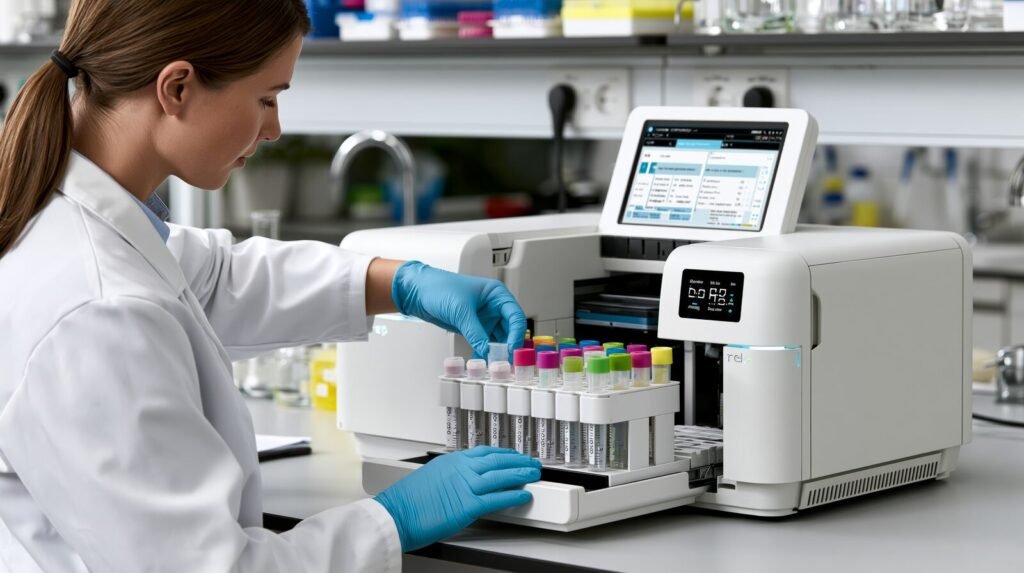
Start with the tests you send out most and check that the menu covers them. Then match throughput to your daily numbers, and look at time to first result, how many reagents stay on board and for how long, how urgent samples are handled, and who provides reagents and service nearby. A chemiluminescence immunoassay (CLIA) analyzer automates these tests with a wider measuring range than manual ELISA.
Why immunoassay demand is growing
Thyroid disease is common: a study of 5,360 adults in eight Indian cities found hypothyroidism in 10.95%, about a third of it previously undetected. Reported vitamin D deficiency in Indian adults ranges from 30% to 91.2% across studies.
Speed matters too. European cardiology guidance recommends repeating high-sensitivity troponin at one hour in suspected heart attack, which only works if the test is available on site.
AutoLumo range at a glance
| S900 | A1860 | A2000 Plus | A6200 | |
|---|---|---|---|---|
| Format | Compact benchtop | Benchtop | Floor model | Modular high-volume |
| Throughput | 180 tests/hour | 180 tests/hour | 200 tests/hour | 600 tests/hour per module |
| Time to first result | 19 min | 21 min | 19 min | 19 min |
| Suits | Small and mid-size laboratories | Small and mid-size laboratories | Busy hospital laboratories | Reference laboratories and chains |
See all CLIA analyzers.
What to check before you buy
Test menu
The assays you send out today, and the ones doctors are starting to ask for.
Throughput
Tests per hour against your peak morning load.
Urgent samples
A STAT lane for troponin and other emergencies.
Reagents on board
Number of positions, cooling and stability once opened.
Calibration
How often each assay needs calibrating, because calibrators cost tests.
Running cost
Reagent pack sizes that match your volume, so kits do not expire unused.
How Milap helps
Site check and demo
We look at your workload and location, and show the system working before you decide.
Installation by our own engineers
Commissioning, checks and handover are done by Milap engineers.
Training for every shift
Application training for the nurses, technicians and doctors who will run samples.
Service after the sale
AMC and CMC contracts, with breakdown calls answered during evenings and weekends too.
Sources
Unnikrishnan AG et al., thyroid disorders in eight Indian cities, Indian J Endocrinol Metab 2013.
Kamboj P et al., Indian J Med Res 2018.
ESC 2020 guideline summary, Medscape.
CLIA and ELISA compared, review article.
Frequently asked questions
Both are immunoassays. CLIA measures light from a chemical reaction and is usually automated, faster and wider in range. ELISA measures colour and costs less per test.
There is no fixed number. Add up what you send out each month; if kits would be used before they expire, in-house testing is worth costing.
Most are closed and use the maker’s reagents. Check the menu before you commit.
Yes. Random-access analyzers run different assays on each sample in the same run.
The AutoLumo range, with installation, training and service.
Planning to bring immunoassay tests in house?
Tell us which tests you send out and how many, and we will suggest a model.