

HbA1c testing methods: HPLC, immunoassay and point of care
HbA1c is now a routine request in every diabetes clinic. The method you choose decides how fast you report and how the test behaves in patients with haemoglobin variants.
- WhereClinic, laboratory or hospital
- MethodHPLC, immunoassay or enzymatic
- VariantsThalassaemia and HbE
- StandardNGSP-certified method
- WorkloadSamples per day
Which HbA1c method should you choose?
Choose HPLC if you run many samples and want variants shown on the chromatogram. Choose a fluorescence immunoassay (FIA) or other point-of-care method if you need a result during the patient visit in a clinic or small laboratory. Whichever you choose, use an NGSP-certified method and check how it behaves with the haemoglobin variants common in your region.
Why HbA1c demand keeps growing
The ICMR-INDIAB study estimated 101 million people with diabetes and 136 million with prediabetes in India. The American Diabetes Association accepts HbA1c of 6.5% or above for diagnosis when an NGSP-certified method is used, sets a goal below 7% for many adults, and advises testing at least twice a year when control is stable and every three months when it is not.
Variants matter here. A study across six Indian cities found beta-thalassaemia trait in 2.78% of people screened, and HbE trait in 23.9% in Dibrugarh. NGSP notes that haemoglobin variants and raised HbF can interfere with some methods, so the choice of method is not only about speed.
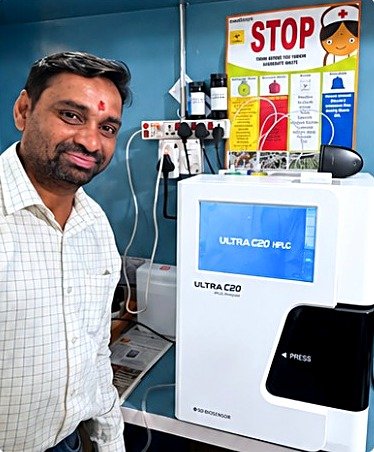
HbA1c methods compared
| HPLC | Immunoassay (including FIA) | Enzymatic on a chemistry analyzer | |
|---|---|---|---|
| Where it is used | Laboratory | Clinic, small laboratory, point of care | Laboratory with a biochemistry analyzer |
| Result during the visit | Usually not | Yes | Usually not |
| Shows variants | Yes, on the chromatogram | No | No |
| Suits | High daily numbers | Low to medium numbers | Laboratories adding HbA1c to an existing analyzer |
See the SD Biosensor STANDARD F200 and F2400 FIA analyzers and our HPLC analyzers.
What to check before you buy
Certification
Ask for the NGSP certificate for the exact method.
Variant behaviour
Ask how the method performs with HbE, HbS and thalassaemia trait.
Samples per day
Single-test devices suit clinics; HPLC suits batches.
Sample type
Fingerstick, venous blood or both.
Quality control
Controls and an external quality scheme you can join.
Other tests
An FIA analyzer can run other assays on the same device.
How Milap helps
Site check and demo
We look at your workload and location, and show the system working before you decide.
Installation by our own engineers
Commissioning, checks and handover are done by Milap engineers.
Training for every shift
Application training for the nurses, technicians and doctors who will run samples.
Service after the sale
AMC and CMC contracts, with breakdown calls answered during evenings and weekends too.
Sources
ICMR-INDIAB, summarised in the National Medical Journal of India.
American Diabetes Association, Standards of Care in Diabetes 2026: diagnosis and glycemic goals.
NIDDK, diabetes and prediabetes tests.
NGSP, factors that interfere with HbA1c test results.
Mohanty D et al., J Community Genet 2013.
Frequently asked questions
Guidelines ask for an NGSP-certified method run with proper quality control. Many clinics use point-of-care HbA1c for monitoring and confirm a diagnosis in the laboratory.
Conditions that change red cell lifespan can shift HbA1c with any method. The doctor interprets the result with the blood count.
They may be haemoglobin variants. This is useful information that other methods do not show.
No. HbA1c does not need a fasting sample.
SD Biosensor FIA analyzers and HPLC systems, with installation, training and reagent supply.
Setting up or upgrading HbA1c testing?
Tell us your daily samples and setting and we will suggest a method and system.