

Choosing a blood pressure monitor and a nebulizer
These are the two devices clinics recommend most often for use at home. A poor choice, or the right device used the wrong way, gives readings and doses nobody can rely on.
- ValidatedCheck the model is listed
- Upper armNot wrist or finger
- CuffMatched to arm size
- TechniqueRest, sit, repeat
- NebulizerCompressor or mesh
What makes a good blood pressure monitor?
Choose an automatic upper-arm monitor whose exact model has been clinically validated, with a cuff that fits the arm. The International Society of Hypertension recommends validated electronic upper-arm devices and a cuff sized to arm circumference, because a cuff that is too small reads high and one that is too large reads low. OMRON states that its blood pressure monitors are clinically validated to AAMI or ESH standards; you can confirm any model on an independent list such as STRIDE BP.
Why accurate home readings matter
The ICMR-INDIAB study estimated that 35.5% of Indian adults, about 315 million people, have hypertension. Home readings help doctors confirm the diagnosis and adjust treatment: the threshold for hypertension is 135/85 mmHg at home, compared with 140/90 mmHg in the clinic.
A monitor that reads a few points out, every day, can mean a tablet too many or too few.
How to measure blood pressure correctly
Rest first
Sit quietly for 3 to 5 minutes.
Sit properly
Back supported, feet flat, arm resting at heart level.
Bare arm
Place the cuff on skin, not over a sleeve.
Three readings
One minute apart, and average the last two.
Same time each day
And write the readings down or use the memory.
Bring the monitor to the clinic
So the doctor can check it against theirs.
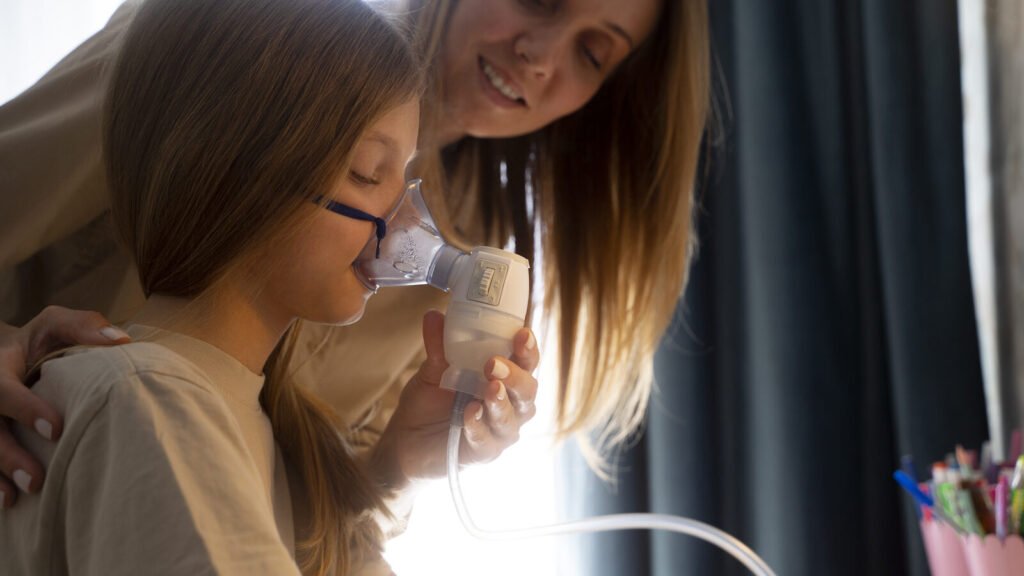
Compressor and mesh nebulizers compared
| Compressor nebulizer | Mesh nebulizer | |
|---|---|---|
| Example | OMRON CompAir NE-C801 | OMRON MicroAir NE-U100 |
| How it works | Compressed air turns medicine into mist | A vibrating mesh makes the mist |
| Power | Mains | 2 AA batteries |
| Noise | Audible | Virtually silent |
| Best for | Regular use at home or in a clinic | Travel, and children who are asleep or lying down |
A nebulizer is not always needed. Asthma guidance (GINA) prefers an inhaler with a spacer for most flare-ups, so ask the doctor which is right for the patient. See OMRON blood pressure monitors and nebulizers.
How Milap helps
Genuine OMRON products
Supplied as an authorised OMRON Healthcare partner.
Supply to clinics and pharmacies
Single units or regular orders.
Model advice
We help you match the monitor, cuff size and nebulizer type to your patients.
A quick reply
We answer enquiries within 24 hours.
Sources
ICMR-INDIAB, summarised in the National Medical Journal of India.
2020 International Society of Hypertension global practice guidelines.
STRIDE BP, validated device list.
GINA summary guide 2025.
OMRON Healthcare, C801 and MicroAir U100.
Frequently asked questions
Guidelines recommend upper-arm monitors. Wrist monitors are more sensitive to arm position.
OMRON states that its monitors are clinically validated to AAMI or ESH standards. You can also look up the exact model on an independent list such as STRIDE BP, where the OMRON HEM-7120, for example, is listed.
Measure the upper arm and choose a cuff whose range includes it.
Neither is better for everyone. Mesh models are quiet and portable; compressor models suit regular use at home.
We supply hospitals, clinics and pharmacies. Contact us and we will guide you.
Need OMRON monitors or nebulizers for your clinic?
Tell us the models and quantities and we will quote.